


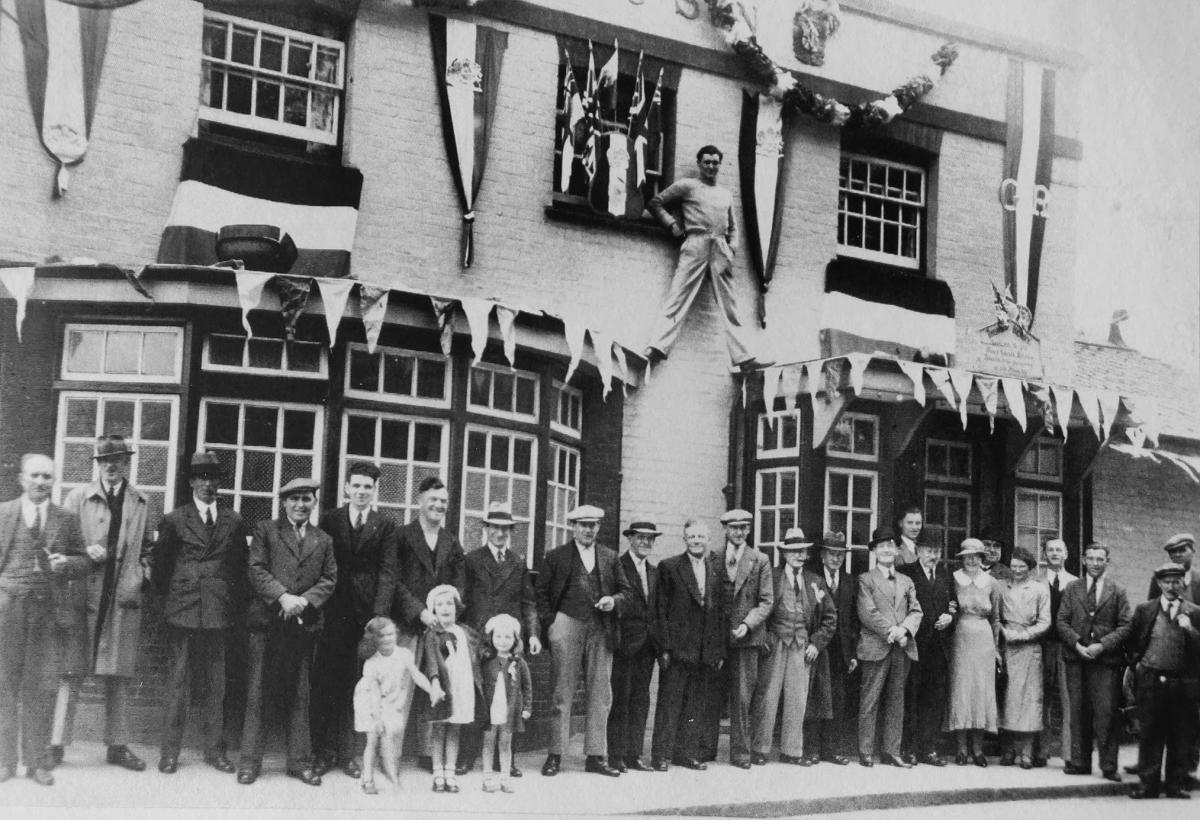

When the Rising Sun Inn in Chapel Street changed its name to The Way Inn in the mid-2000s, some local folk were not too happy with the trend of altering pub names – a practice that had already become increasingly common.
In the case of the Rising Sun, the new name was thought to signify the pub’s location on the edge of the town centre, or perhaps a nod to a lesser-known fact: that a local pound, with a weighing machine, was once situated next to the inn.
This pound, or pinfold, was an enclosure for stray cattle, impounded and released on payment to the owner after being weighed for its poundage. The heavier the animal, the more money had to be paid.
The enclosure was later replaced with a tollgate, where pedestrians could pass through free of charge, but horse-drawn vehicles had to pay a toll. Both the pound and tollgate were run by the parish during the 19th century.
Chapel Street was once home to several inns. The Rose Inn stood on the corner of Brook Street and Chapel Street, the Crown and Cushion (originally the Black Cow) was further up, and above the railway bridge was the Half Moon Tavern, on land known as Moon Close. The Rising Sun completed the set.
In the 16th century, another inn – The Holy Lamb – stood in what was then called White Way, or Hollie Ghost Street, the old name for Chapel Street.
The Rising Sun itself dated back to the mid-19th century. One of the first mentions in local directories was in 1867, when Mrs Elizabeth Gregg was listed as the owner. Its name came from the badge of the Percy family, a noble northern dynasty that had held lands in Hampshire since the Norman Conquest.
Chapel Street changed dramatically with the arrival of the railway in 1839. Rows of 16th-century houses on its west side were demolished, and further clearances followed in 1904 when the line was widened to four tracks. Only a pair of almshouses, built by former mayor John Burgess Soper in 1891, survived – although their proximity to the bridge meant residents suffered noise and vibration from passing trains.
More houses were lost in 1904 for the new goods yard, now the site of Winterthur offices and the Victory Hill flats. The Half Moon Tavern, just below the Rising Sun, was sold in 1907 and converted into a workshop, later becoming a tyre business and eventually redeveloped as offices.
Opposite the Rising Sun stood the Old Cemetery Lodge, home to the caretaker of the Holy Ghost burial ground. For a time, it was also the childhood home of John Arlott, the cricket commentator. The burial ground, dating back to the 13th century, was superseded in 1913 by the Worting Road Cemetery, which remains Basingstoke’s official cemetery.
The lower part of Chapel Street, east side from Brook Street, once contained the Rose Inn, several houses, and small businesses including a newsagent.
In the mid-1960s, the entire street was demolished as part of Basingstoke’s redevelopment scheme. Many of the houses were over 400 years old and had preservation orders, but an oversight meant they were lost – a blow to the town’s historic character.
There was one unexpected outcome of those demolitions. In early 1965, the almshouses built by John Soper were among the first to be pulled down. Later that year, a goods train wagon crashed through the buffers and came to rest exactly where the almshouses had stood. Police closed the road at rush hour, causing chaos, but as one officer remarked: “Good job the two houses had been knocked down, or it could have been a nasty accident.” Few disagreed.
Originally written by Robert Brown in August 2006.


Share